Terracotta Transitional Rug
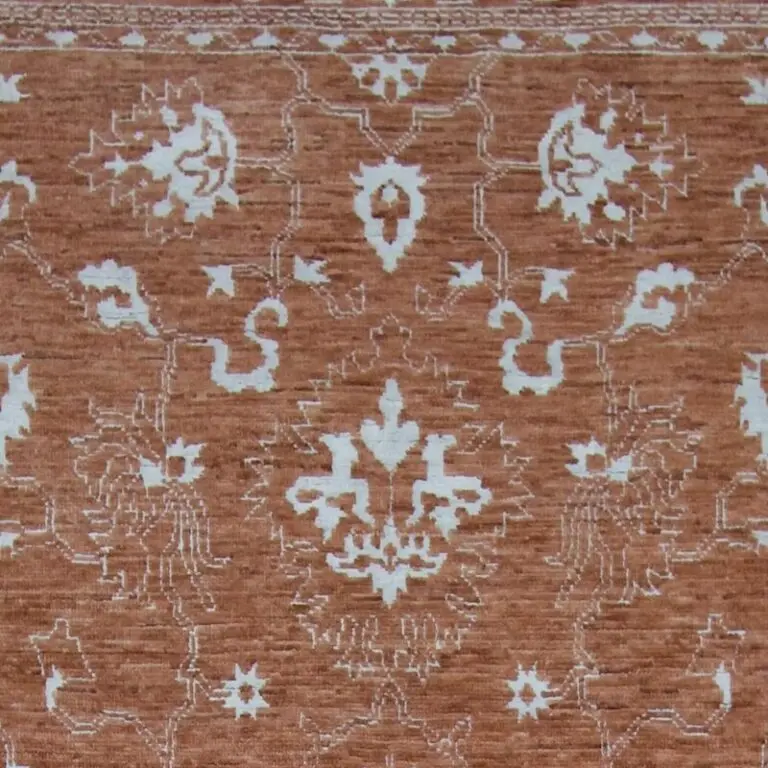
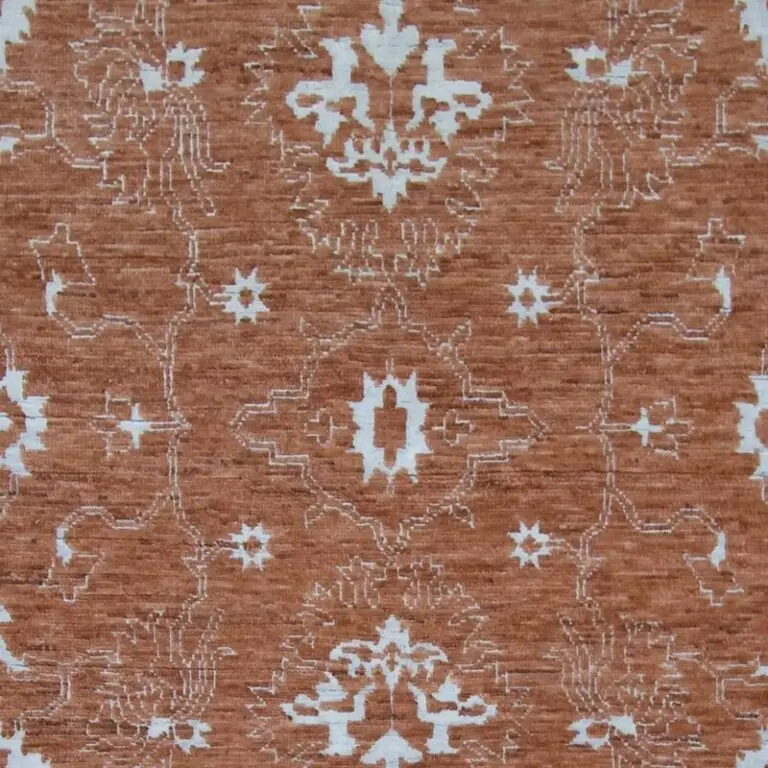
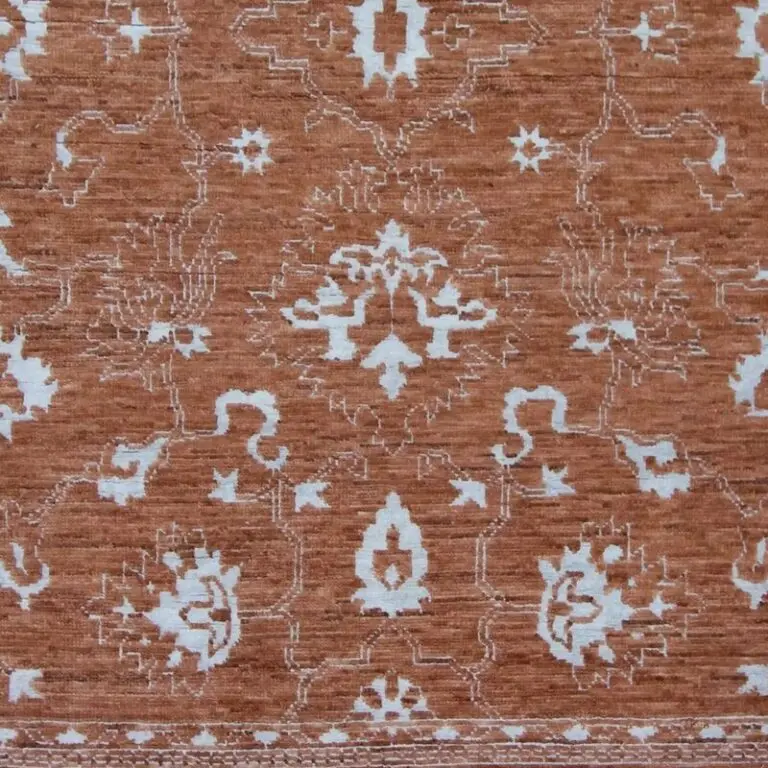
This terracotta transitional rug was hand knotted in India in wool and bamboo silk. Its warm, earthy field carries a pale ivory design, so it reads as a quiet base with traditional drawing on top. The size can be confirmed in our showroom.
The design up close
The field of this terracotta transitional rug is covered in ivory flower heads, palmettes and curling vines. A large flower medallion sits at the centre, with a smaller medallion stacked below it and a pale flower head at the lower end of the centre line. Pairs of flower heads sit to either side of the centre, and the spaces between them are filled with buds and small rosettes.
The outer border carries a band of ivory vine scrolls and leaves, set between a row of small diamond rosettes along the outer edge. Inside it, a narrow stripe of dots separates the border from the field. Each corner of the field holds a small ivory motif, so the pattern turns neatly at the ends.
Across this terracotta transitional rug, the ivory drawing is fine and close, so the rug reads as one pattern from a distance and as separate flowers up close.
India and its weaving
Agra has been a carpet-weaving centre since at least the 17th century. The Bhadohi and Mirzapur area of Uttar Pradesh is the largest carpet-making region in India, and Indian workshops weave a wide range of designs. Wool is the most common pile. Some rugs mix wool with silk, and some use bamboo silk, a viscose (rayon) fibre made from bamboo cellulose with a silk-like sheen.
Bamboo silk has a silk-like sheen, but it is softer and less resilient than wool, so a rug with bamboo silk suits rooms with lighter foot traffic.
How this rug is made
Hand knotting builds this terracotta transitional rug one knot at a time on a loom. Wool gives the pile its body, and the bamboo silk adds a soft, elegant sheen over the design.
Sizing this terracotta transitional rug for your room
The size can be confirmed in our showroom, where we can lay it beside your furniture before you decide. A living room suits a rug like this when the sofa and armchairs can sit on it or around it, with the front legs resting on the rug. In a dining room, leave space for the chairs to slide back without the legs catching on the edge.
Terracotta sits well with timber floors and cream or ivory walls, and the ivory drawing ties in with white or grey furniture. In a bedroom, a terracotta transitional rug beside the bed gives warmth underfoot without competing with the bedding.
Looking after your rug
Vacuum it on a suction-only setting, or with the beater bar switched off, so the brush does not pull at the knots. Turn it around every six to twelve months so sun and foot traffic wear it evenly. Blot spills with a clean white cloth and cold water rather than rubbing them in. Rubbing spills can dull bamboo silk, so this rug needs a cleaner who handles that fibre by hand. When it needs a full clean, choose a cleaner who washes handmade rugs by hand.
Put a good underlay beneath it. It stops the rug sliding on timber or tiles, adds cushioning and takes some of the wear off the pile. Moths like wool in dark, quiet spots, such as the part of a rug under a sofa, so vacuum those areas often and lift the furniture now and then.
See it before you buy
Visit our showroom at 307 Penshurst St, North Willoughby, open every day from 11 am to 4:30 pm, to see this terracotta transitional rug in person. If you would rather judge it in your own room, with your own light and furniture, book an in-home viewing and we will bring a selection to you.
Browse more Transitional, or ask about a custom made rug in your own size and colour. Read more about rugs and carpets.