Transitional Wool Runner
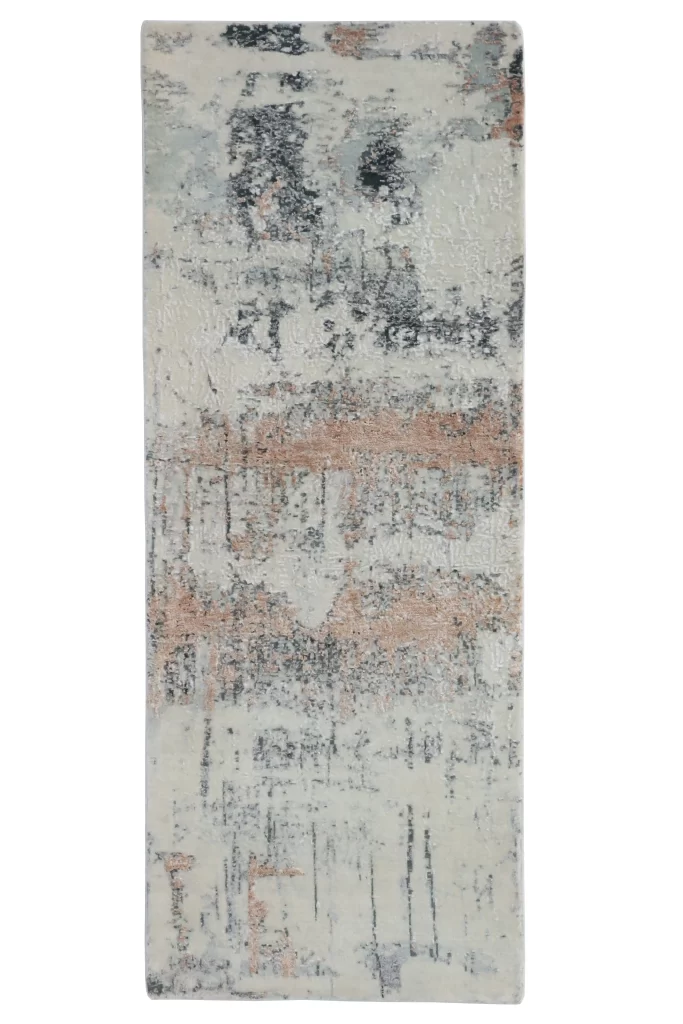
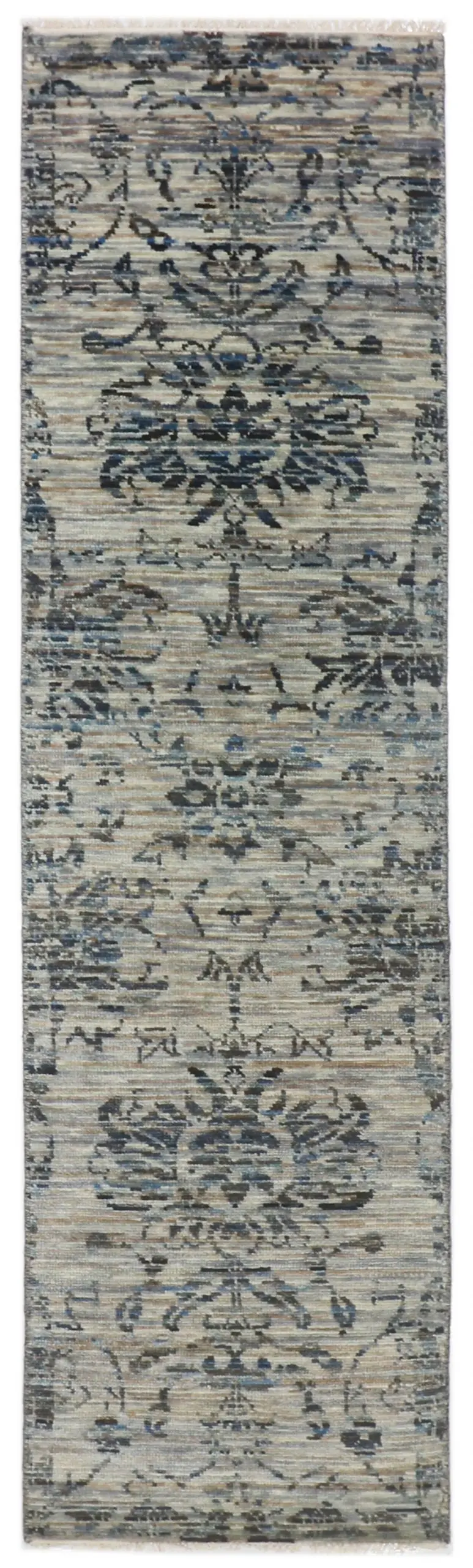
This transitional wool runner is a hand knotted runner made in India from New Zealand wool. Its size can be confirmed in the showroom. An all-over design of rosettes and leafy scrolls in navy, slate blue and charcoal sits on a beige ground with fine horizontal striping.
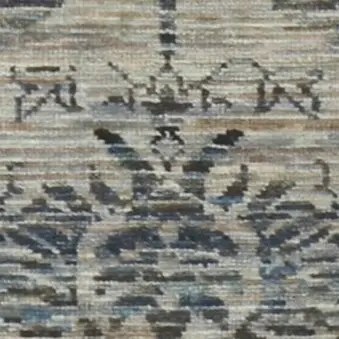
The design up close
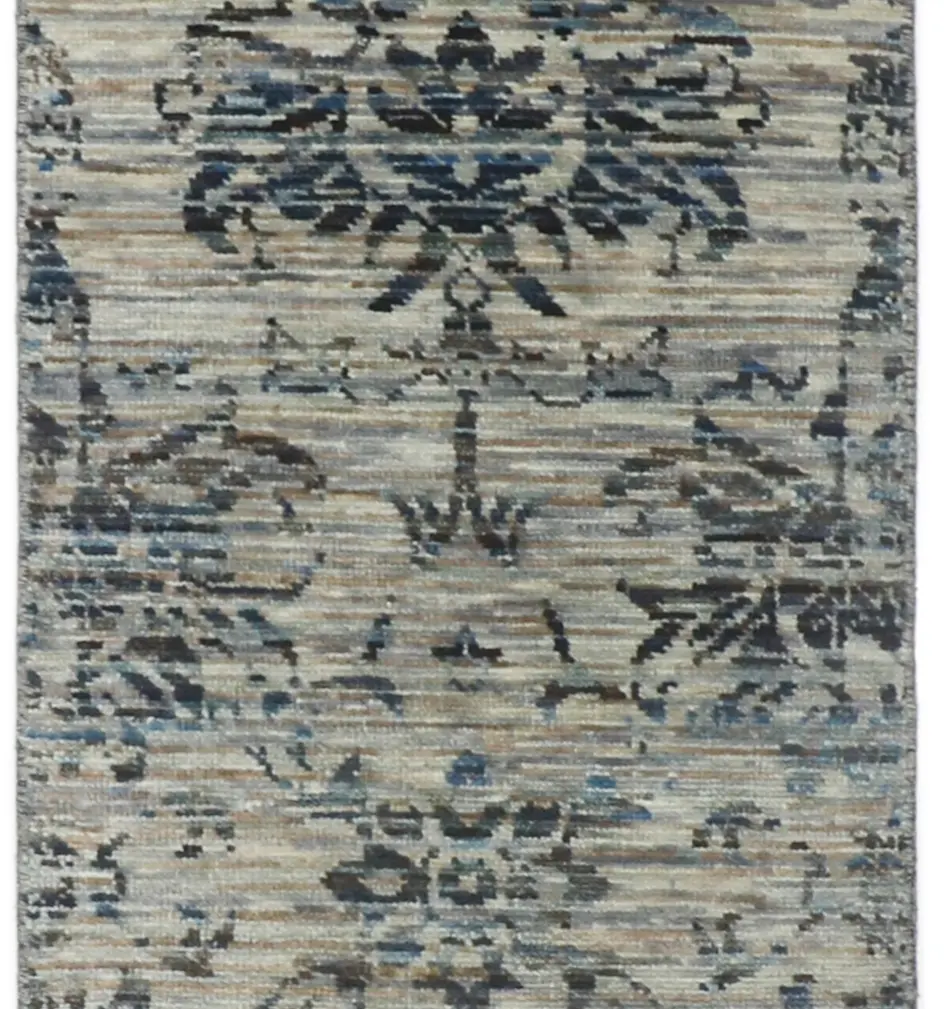
A larger rosette in navy and slate sits down the length of the field, repeated towards the top, the middle and the lower end. Smaller leaf sprigs and curling stems fill the spaces between them, so the pattern repeats in a steady line from end to end.
Many of the navy outlines are broken, so the motifs look softly faded. Where the outlines break, the beige ground shows through, so the design looks layered rather than printed. Our records note German dyes, and the blues and greys sit together in one cool family of tones.
In this transitional wool runner, a narrow border of small motifs frames the field, and a short fringe finishes both ends.
The rosettes are spaced evenly, so no single one dominates the runner, and the leaves between them carry the pattern in a continuous band down its length.
Indian weaving and wool
India has a long hand-knotted rug tradition, with weaving centres including Agra and the Bhadohi and Mirzapur area of Uttar Pradesh. Agra has been a carpet-weaving centre since at least the 17th century, and the Bhadohi and Mirzapur area is the largest carpet-making region in India.
Indian workshops weave many modern and abstract designs as well as classic patterns. Wool is the most common pile, and this transitional wool runner blends a classic floral layout with a softer, quieter palette.
How a hand knotted runner is made
Weavers tie each knot by hand on a loom, row after row, then shear the pile level. Turn the runner over and the design shows on the back too, with the small irregularities that only hand knotting leaves. Wool is soft and resilient, which suits a runner that gets daily use.
Sizing this transitional wool runner
The size of this runner can be confirmed in the showroom. Runners suit hallways, kitchen galleys and the floor beside a bed, and the showroom team can help you judge the length against your own space.
Its navy and beige tones suit timber floors and plain walls, and the pattern reads best where the runner is not crowded by bold furniture.
This transitional wool runner suits a hallway with timber or tiled floors, where a patterned runner adds colour and a soft surface underfoot.
Looking after your runner
Wool handles light wear well, but a hallway runner should be vacuumed weekly to keep grit from working into the pile.
Vacuum it on a suction-only setting, or with the beater bar switched off, so the brush does not pull at the knots. Turn it end to end every six to twelve months so foot traffic wears it evenly. Blot spills with a clean white cloth and cold water rather than rubbing them in. When it needs a full clean, choose a cleaner who washes handmade rugs by hand.
Put a good underlay beneath this transitional wool runner. It stops the runner sliding on timber or tiles, adds cushioning and takes some of the wear off the pile. Moths like wool in dark, quiet spots, so lift the runner now and then and vacuum the floor beneath it.
See it before you buy
Visit our showroom at 307 Penshurst St, North Willoughby, open every day from 11 am to 4:30 pm, to see this transitional wool runner in person. If you would rather judge it in your own room, with your own light and furniture, book an in-home viewing and we will bring a selection to you.
Browse more Modern Transitional, or ask about a custom made rug in your own size and colour. Read more about rugs and carpets.